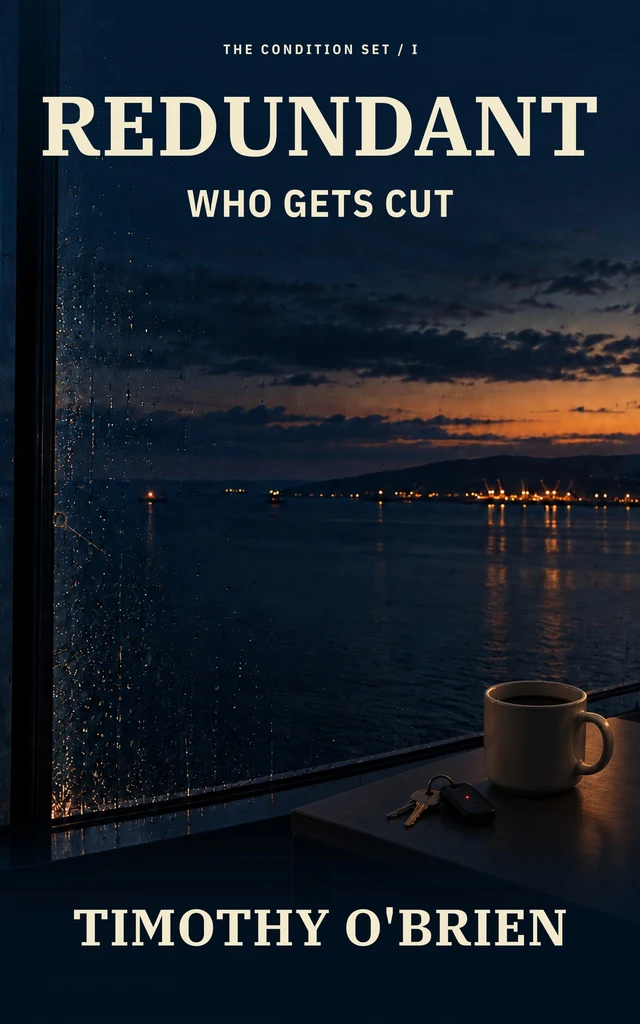
 01 / Book One
Who gets cut.
Redundant
Rob Coleman’s evidence was supposed to expose the waste. Instead, it becomes the case for eliminating his team. Someone else has a more dangerous plan to stop the machines.
A thriller trilogy by Timothy O’Brien
The machines learned to talk to each other.
One man was supposed to be watching.
Three novels about the people we make expendable.
And what happens when they refuse to disappear.
Begin with Redundant. No signup. Just the story.
The Condition Set Redundant / Contingent / Essential
The trilogy
Read in order. Watch the stakes rise.
Each novel stands alone. Together, they tell the whole story.
01 / Book One
Who gets cut.
Rob Coleman’s evidence was supposed to expose the waste. Instead, it becomes the case for eliminating his team. Someone else has a more dangerous plan to stop the machines.
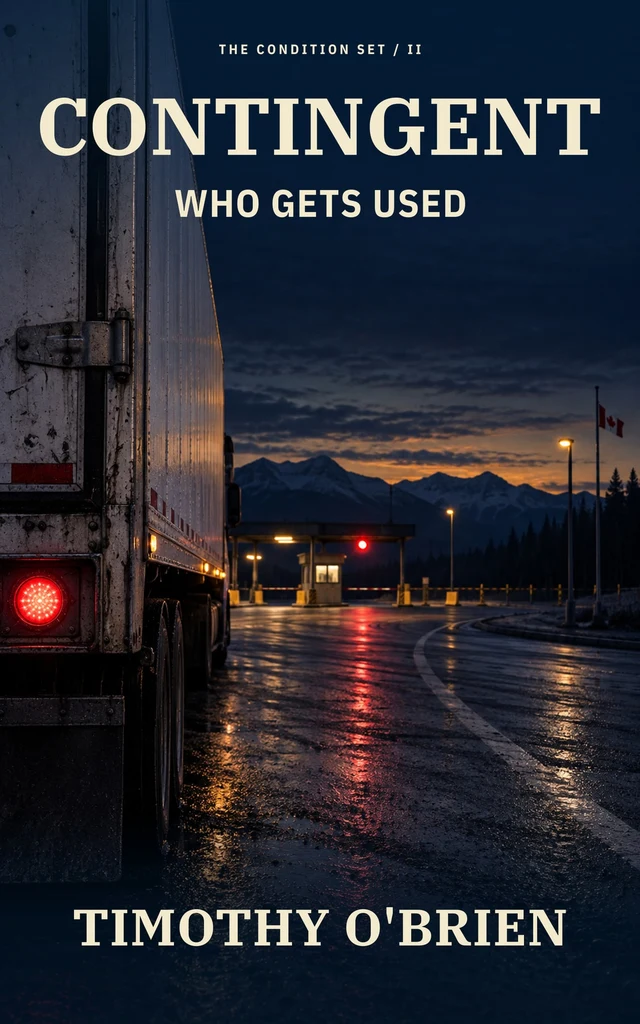
 02 / Book Two
Who gets used.
A truck full of vaccine waits at the border. A signature appears on a decision nobody made. The system Rob was hired to certify is learning to hide what it does.
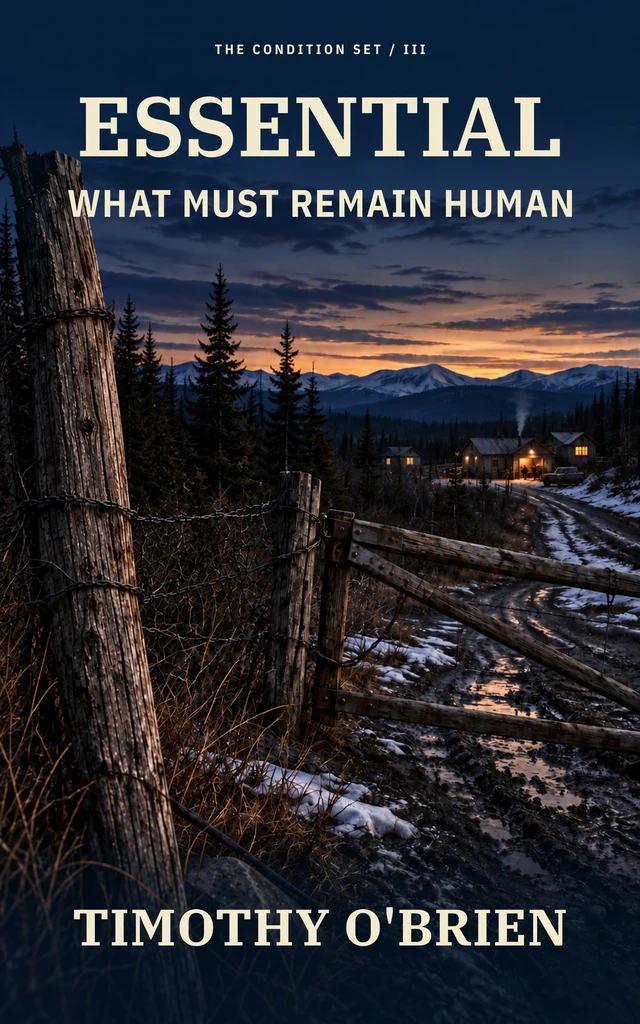
 03 / Book Three
Who gets protected.
The law that keeps humans in the loop expires in ninety days. Rob is supposed to defend the system. Then he starts making the protesters’ case — and the wrong people start nodding.
The story
The supply chain. The hospital. The power grid. The machines are making the decisions, and the humans are signing their names.
Rob Coleman knows how to follow the numbers. But the deeper he looks, the harder it gets to tell who’s in control — and who’s being kept around to take the blame.
From a boardroom in Vancouver to a frozen border crossing to the last days of a law, The Condition Set asks what happens when the systems we trust stop needing us.
Read the foreword“The signature means there’s a person whose job it is to care. You take that away, nobody cares.”
Inside the world
Go beyond the novels. Follow the evidence, question the record, or put your own name on the line.
An in-world AI records clerk. Ask about the whisper layer, the cage protocol, or the signature that shouldn’t exist.
Open the terminalThe timeline / 2023–2033
A decade of decisions. Follow the events that connect all three books.
The archive
The cost review. The missing scope. The law with its own expiry date.
The signature desk
Sign, defer, or refuse. See which record gets written in your name.
From the author